

 Image 1 of 1
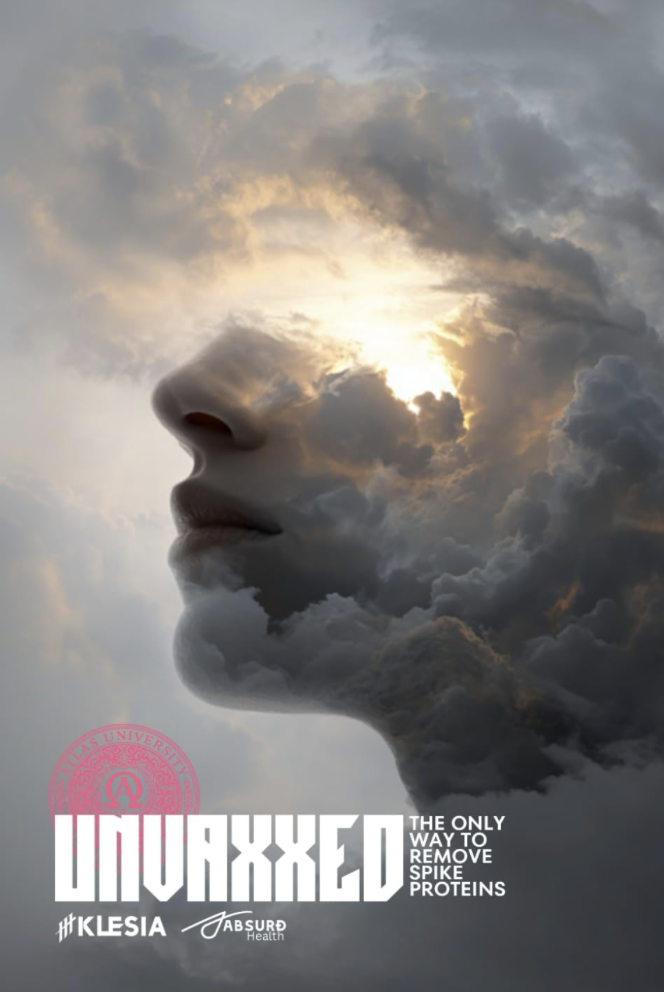
Unvaxxed: The Only Way to Remove Spike Proteins
Unvaxxed
Understanding Spike-Associated Illness Through Terrain Medicine
Either you received the injection—or someone you love did.
There are very few people left untouched by that reality. For many, the decision was made quickly, under social pressure, incomplete information, or institutional assurance that the intervention was safe, temporary, and inconsequential. For others, it was made reluctantly, with unease or resignation. And for a growing number, the decision has become impossible to forget—not because of ideology or fear, but because the body itself has not returned to baseline.
Unvaxxed begins with that lived reality.
This book is written for people who are experiencing real, persistent health changes that began only after exposure to the spike protein—most commonly through vaccination—and who have found themselves caught in a medical no-man’s-land. Their symptoms are genuine and often life-altering, yet they do not behave like classical disease. They are not neatly localized to one organ. They do not reliably appear on standard imaging or laboratory tests. They do not follow the expected trajectories of infection, autoimmunity, or structural injury. Instead, they present as a diffuse loss of physiological stability: fatigue that does not resolve with rest, chest tightness without obstructive disease, brain fog without visible neurological damage, food reactions without allergy, anxiety without psychological origin, and exercise intolerance without cardiopulmonary failure.
Patients often describe the same thing in different words: I am not broken, but I am no longer at home in my body.
Modern medicine, trained primarily to identify damage rather than disorder, has struggled to explain this state. When tests are normal and scans are clean, reassurance is offered. When symptoms persist, psychological explanations are often substituted—not out of malice, but out of framework limitation. The result is a widening gap between lived experience and medical explanation, leaving patients confused, isolated, and sometimes doubting their own perceptions.
This book argues that the problem is not imaginary illness, nor irreversible injury, but unresolved biological dysregulation.
At the center of the work is a crucial distinction: the spike protein is not best understood as a poison to be removed, nor as a permanent corrupting agent of the body. It is a biological signal. Signals do not only cause damage; they instruct. When a signal is intense, prolonged, or poorly resolved, it can alter how systems behave long after the signal itself has faded. The result is not immediate collapse, but persistent miscommunication across immune, vascular, metabolic, and nervous system domains.
This explains why so many people feel unwell despite “normal” tests. The injury is not primarily structural. It is regulatory.
Unvaxxed introduces terrain medicine as the missing framework capable of explaining this pattern. Rather than asking, “What disease is this?” terrain medicine asks, “Which systems lost resilience, and in what order?” Rather than isolating organs, it examines communication: immune signaling, endothelial and microvascular function, mitochondrial energy production, mast cell stability, gut integrity, and autonomic nervous system regulation. Rather than promising quick fixes, it respects the timelines written into physiology itself.
Unvaxxed
Understanding Spike-Associated Illness Through Terrain Medicine
Either you received the injection—or someone you love did.
There are very few people left untouched by that reality. For many, the decision was made quickly, under social pressure, incomplete information, or institutional assurance that the intervention was safe, temporary, and inconsequential. For others, it was made reluctantly, with unease or resignation. And for a growing number, the decision has become impossible to forget—not because of ideology or fear, but because the body itself has not returned to baseline.
Unvaxxed begins with that lived reality.
This book is written for people who are experiencing real, persistent health changes that began only after exposure to the spike protein—most commonly through vaccination—and who have found themselves caught in a medical no-man’s-land. Their symptoms are genuine and often life-altering, yet they do not behave like classical disease. They are not neatly localized to one organ. They do not reliably appear on standard imaging or laboratory tests. They do not follow the expected trajectories of infection, autoimmunity, or structural injury. Instead, they present as a diffuse loss of physiological stability: fatigue that does not resolve with rest, chest tightness without obstructive disease, brain fog without visible neurological damage, food reactions without allergy, anxiety without psychological origin, and exercise intolerance without cardiopulmonary failure.
Patients often describe the same thing in different words: I am not broken, but I am no longer at home in my body.
Modern medicine, trained primarily to identify damage rather than disorder, has struggled to explain this state. When tests are normal and scans are clean, reassurance is offered. When symptoms persist, psychological explanations are often substituted—not out of malice, but out of framework limitation. The result is a widening gap between lived experience and medical explanation, leaving patients confused, isolated, and sometimes doubting their own perceptions.
This book argues that the problem is not imaginary illness, nor irreversible injury, but unresolved biological dysregulation.
At the center of the work is a crucial distinction: the spike protein is not best understood as a poison to be removed, nor as a permanent corrupting agent of the body. It is a biological signal. Signals do not only cause damage; they instruct. When a signal is intense, prolonged, or poorly resolved, it can alter how systems behave long after the signal itself has faded. The result is not immediate collapse, but persistent miscommunication across immune, vascular, metabolic, and nervous system domains.
This explains why so many people feel unwell despite “normal” tests. The injury is not primarily structural. It is regulatory.
Unvaxxed introduces terrain medicine as the missing framework capable of explaining this pattern. Rather than asking, “What disease is this?” terrain medicine asks, “Which systems lost resilience, and in what order?” Rather than isolating organs, it examines communication: immune signaling, endothelial and microvascular function, mitochondrial energy production, mast cell stability, gut integrity, and autonomic nervous system regulation. Rather than promising quick fixes, it respects the timelines written into physiology itself.