

 Image 1 of 1
PTSD is not just a memory problem.
For many people, trauma becomes a body-wide survival state. The nervous system stays on guard. Sleep breaks. Motivation disappears. Pain increases. The body reaches for relief through alcohol, cannabis, sugar, isolation, anger, or avoidance.
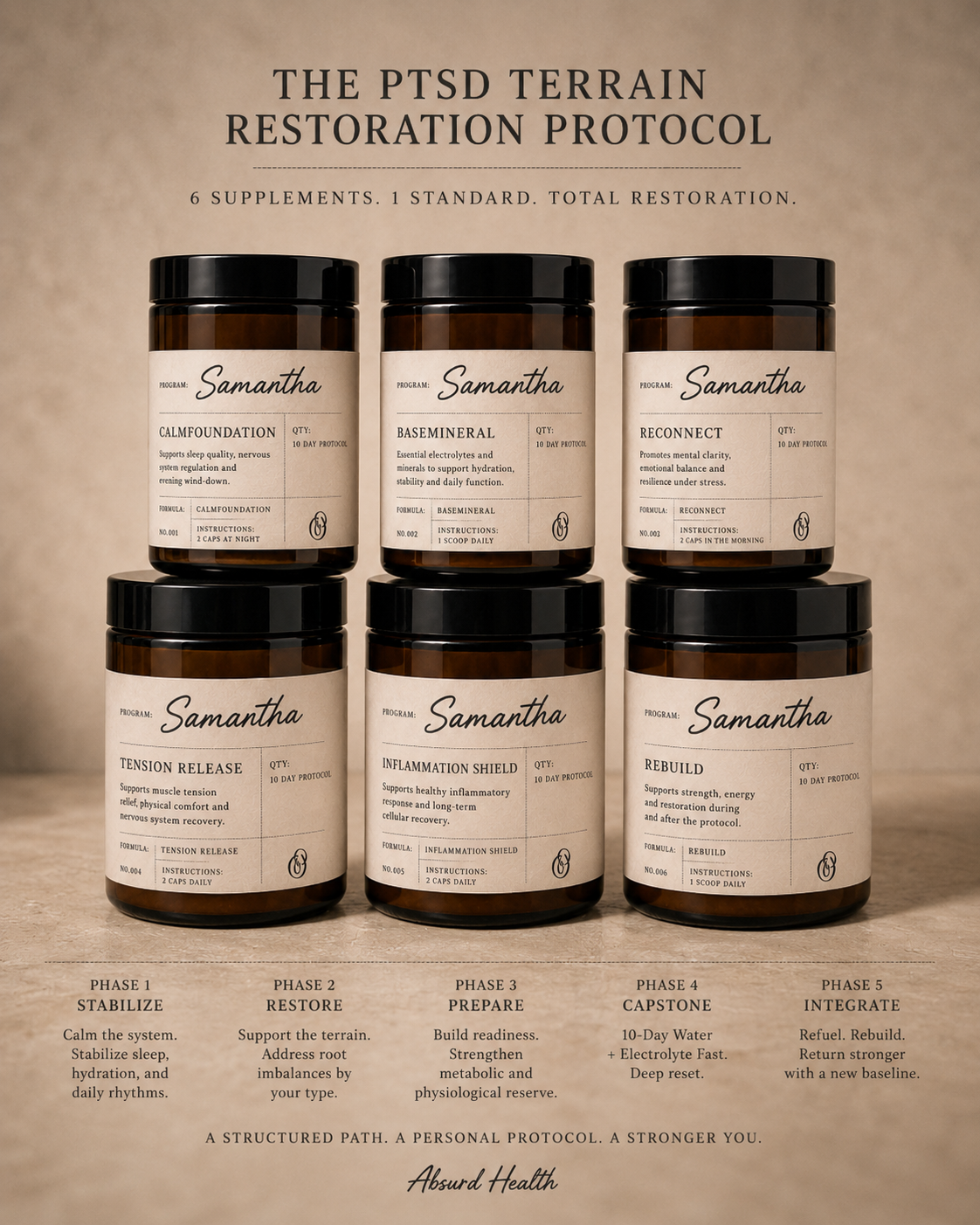
The Absurd Health PTSD Terrain Restoration Protocol is designed to help interrupt that cycle.
This is not a one-size-fits-all trauma program. We begin by identifying your dominant PTSD terrain: alarm, shutdown, reward collapse, complex relational trauma, somatic pain, or inflammatory fatigue. Then we build the protocol around what your body is actually doing.
The protocol is designed to support:
sleep and circadian repair
nervous-system regulation
mineral and electrolyte restoration
protein and nutrient sufficiency
reduction of inflammatory burden
metabolic stability
reduction of relief-seeking loops
improved self-control and future planning
readiness for deeper trauma work
For some prepared adults, the protocol may include a carefully screened neuroketotic fasting phase. This is not for everyone, and it is never treated casually. The purpose is to help the body move from constant external relief-seeking toward internal reserve and strategic self-governance.
This protocol may be a fit if trauma has left you feeling:
always on guard
unable to sleep deeply
numb or emotionally shut down
flat, joyless, or unmotivated
trapped in pain or body tension
exhausted, foggy, or inflamed
dependent on alcohol, cannabis, sugar, or avoidance for relief
unable to move forward even after trying therapy or other approaches
Most PTSD care starts with the mind.
We start with the terrain.
If the body is exhausted, inflamed, sleepless, reward-collapsed, or stuck in alarm, deeper trauma work may not land. The protocol helps stabilize the body first, then builds toward deeper restoration.
This is not about forcing yourself to “get over it.”
It is about helping your body stop living as if the emergency is still happening.
PTSD is not just a memory problem.
For many people, trauma becomes a body-wide survival state. The nervous system stays on guard. Sleep breaks. Motivation disappears. Pain increases. The body reaches for relief through alcohol, cannabis, sugar, isolation, anger, or avoidance.
The Absurd Health PTSD Terrain Restoration Protocol is designed to help interrupt that cycle.
This is not a one-size-fits-all trauma program. We begin by identifying your dominant PTSD terrain: alarm, shutdown, reward collapse, complex relational trauma, somatic pain, or inflammatory fatigue. Then we build the protocol around what your body is actually doing.
The protocol is designed to support:
sleep and circadian repair
nervous-system regulation
mineral and electrolyte restoration
protein and nutrient sufficiency
reduction of inflammatory burden
metabolic stability
reduction of relief-seeking loops
improved self-control and future planning
readiness for deeper trauma work
For some prepared adults, the protocol may include a carefully screened neuroketotic fasting phase. This is not for everyone, and it is never treated casually. The purpose is to help the body move from constant external relief-seeking toward internal reserve and strategic self-governance.
This protocol may be a fit if trauma has left you feeling:
always on guard
unable to sleep deeply
numb or emotionally shut down
flat, joyless, or unmotivated
trapped in pain or body tension
exhausted, foggy, or inflamed
dependent on alcohol, cannabis, sugar, or avoidance for relief
unable to move forward even after trying therapy or other approaches
Most PTSD care starts with the mind.
We start with the terrain.
If the body is exhausted, inflamed, sleepless, reward-collapsed, or stuck in alarm, deeper trauma work may not land. The protocol helps stabilize the body first, then builds toward deeper restoration.
This is not about forcing yourself to “get over it.”
It is about helping your body stop living as if the emergency is still happening.