

 Image 1 of 1
Most prayer fails not because it lacks sincerity, faith, or discipline—but because it bypasses truth.
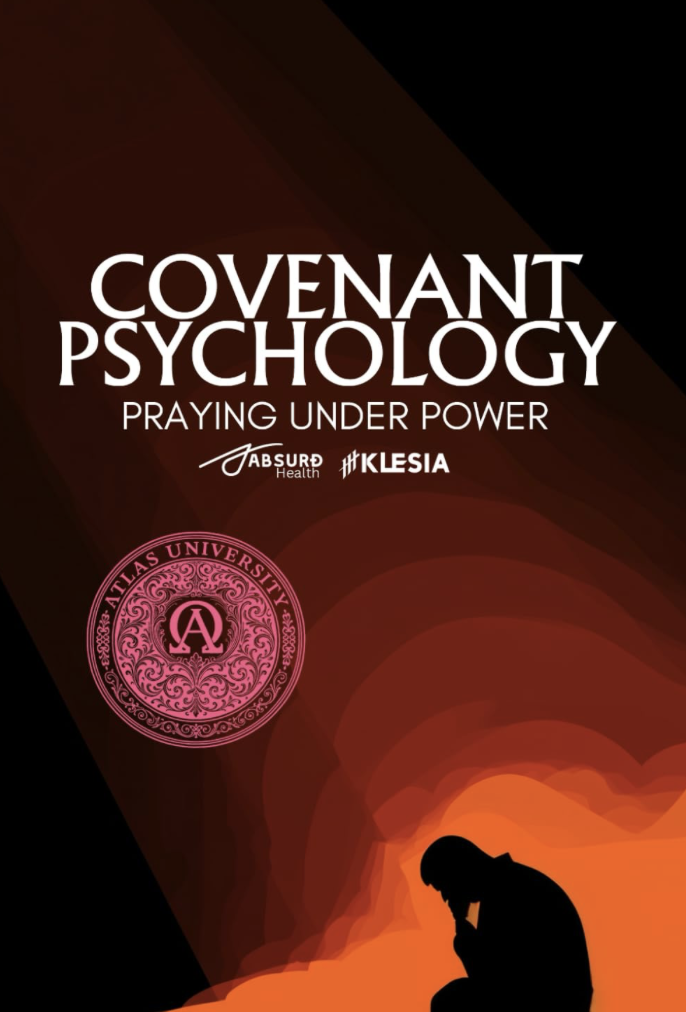
In Prayer Under Power, Covenant Psychology is articulated at its core: prayer not as religious performance, emotional regulation, or doctrinal recitation, but as truthful address under covenant, where the soul stops resisting what it actually feels and stands whole before God.
This book dismantles the modern assumptions that prayer must sound calm, mature, or correct to be effective. It exposes why insight without alignment fails, why emotional suppression masquerades as holiness, and why obedience demanded before honesty fractures the soul. Drawing deeply from Scripture—especially the Psalms and Gethsemane—this work reframes prayer as the primary mechanism by which the inner life is reordered, not through intensity or catharsis, but through consent to truth.
At the heart of the book is a single governing principle:
the strongest present emotion must speak first if prayer is to have power.
Anger, fear, grief, shame, and longing are not obstacles to prayer—they are gateways. When these realities are hidden, they harden into belief, distort theology, and silently govern behavior. When they are spoken honestly to God—without correction, explanation, or spiritual bypass—resistance collapses and alignment becomes possible.
This is not a self-help manual.
It is not a therapeutic technique.
It is not a charismatic framework.
Prayer Under Power is a theological-psychological manifesto that restores prayer to its pre-religious, covenantal form: direct address without performance. It shows why calm can be counterfeit, why repeated emotions signal depth rather than failure, how obedience flows naturally only after resistance ends, and why any authority that pressures inner life violates covenant.
The book also extends outward, redefining healing, holiness, maturity, confession, forgiveness, leadership, and community—offering safeguards against spiritual coercion, emotional manipulation, and false submission. It insists that no person has authority over another’s inner life, and that truth spoken between people must always follow truth spoken to God.
Written for readers who are exhausted by religious performance, disillusioned with therapeutic looping, or trapped between emotional honesty and obedience, Prayer Under Power offers a single, demanding invitation:
Stop managing yourself in the presence of God.
Say the first true thing.
Remain until resistance ends.
What follows is not technique—but coherence.
Not control—but covenant.
Not emotional mastery—but an undivided soul.
Most prayer fails not because it lacks sincerity, faith, or discipline—but because it bypasses truth.
In Prayer Under Power, Covenant Psychology is articulated at its core: prayer not as religious performance, emotional regulation, or doctrinal recitation, but as truthful address under covenant, where the soul stops resisting what it actually feels and stands whole before God.
This book dismantles the modern assumptions that prayer must sound calm, mature, or correct to be effective. It exposes why insight without alignment fails, why emotional suppression masquerades as holiness, and why obedience demanded before honesty fractures the soul. Drawing deeply from Scripture—especially the Psalms and Gethsemane—this work reframes prayer as the primary mechanism by which the inner life is reordered, not through intensity or catharsis, but through consent to truth.
At the heart of the book is a single governing principle:
the strongest present emotion must speak first if prayer is to have power.
Anger, fear, grief, shame, and longing are not obstacles to prayer—they are gateways. When these realities are hidden, they harden into belief, distort theology, and silently govern behavior. When they are spoken honestly to God—without correction, explanation, or spiritual bypass—resistance collapses and alignment becomes possible.
This is not a self-help manual.
It is not a therapeutic technique.
It is not a charismatic framework.
Prayer Under Power is a theological-psychological manifesto that restores prayer to its pre-religious, covenantal form: direct address without performance. It shows why calm can be counterfeit, why repeated emotions signal depth rather than failure, how obedience flows naturally only after resistance ends, and why any authority that pressures inner life violates covenant.
The book also extends outward, redefining healing, holiness, maturity, confession, forgiveness, leadership, and community—offering safeguards against spiritual coercion, emotional manipulation, and false submission. It insists that no person has authority over another’s inner life, and that truth spoken between people must always follow truth spoken to God.
Written for readers who are exhausted by religious performance, disillusioned with therapeutic looping, or trapped between emotional honesty and obedience, Prayer Under Power offers a single, demanding invitation:
Stop managing yourself in the presence of God.
Say the first true thing.
Remain until resistance ends.
What follows is not technique—but coherence.
Not control—but covenant.
Not emotional mastery—but an undivided soul.